👤 About Me
I am currently a MPhil student at the School of Integrated Circuits, Wuhan University. Previously, I completed my undergraduate studies in Communication Engineering at the School of Information Engineering, Wuhan University of Technology.
My research interests are broad and interdisciplinary, encompassing AI for Science, AI for Medicine, and Stochastic Physics. I am particularly passionate about leveraging artificial intelligence to advance natural science and healthcare research.
If you’re interested in my work, feel free to reach out!
👉📧 Email me
📖 Educations
- 2023.09 - 2026.06, MPhil., School of Integrated Circuits, Wuhan University
- 2019.09 - 2023.06, Bachelor, School of Information Engineering, Wuhan University of Technology
- 2016.09 - 2019.06, High school, Ouhai Middle School, Zhejiang Province
📝 Publications
(*Corresponding Author)
A machine learning-based framework for predicting the power factor of thermoelectric materials
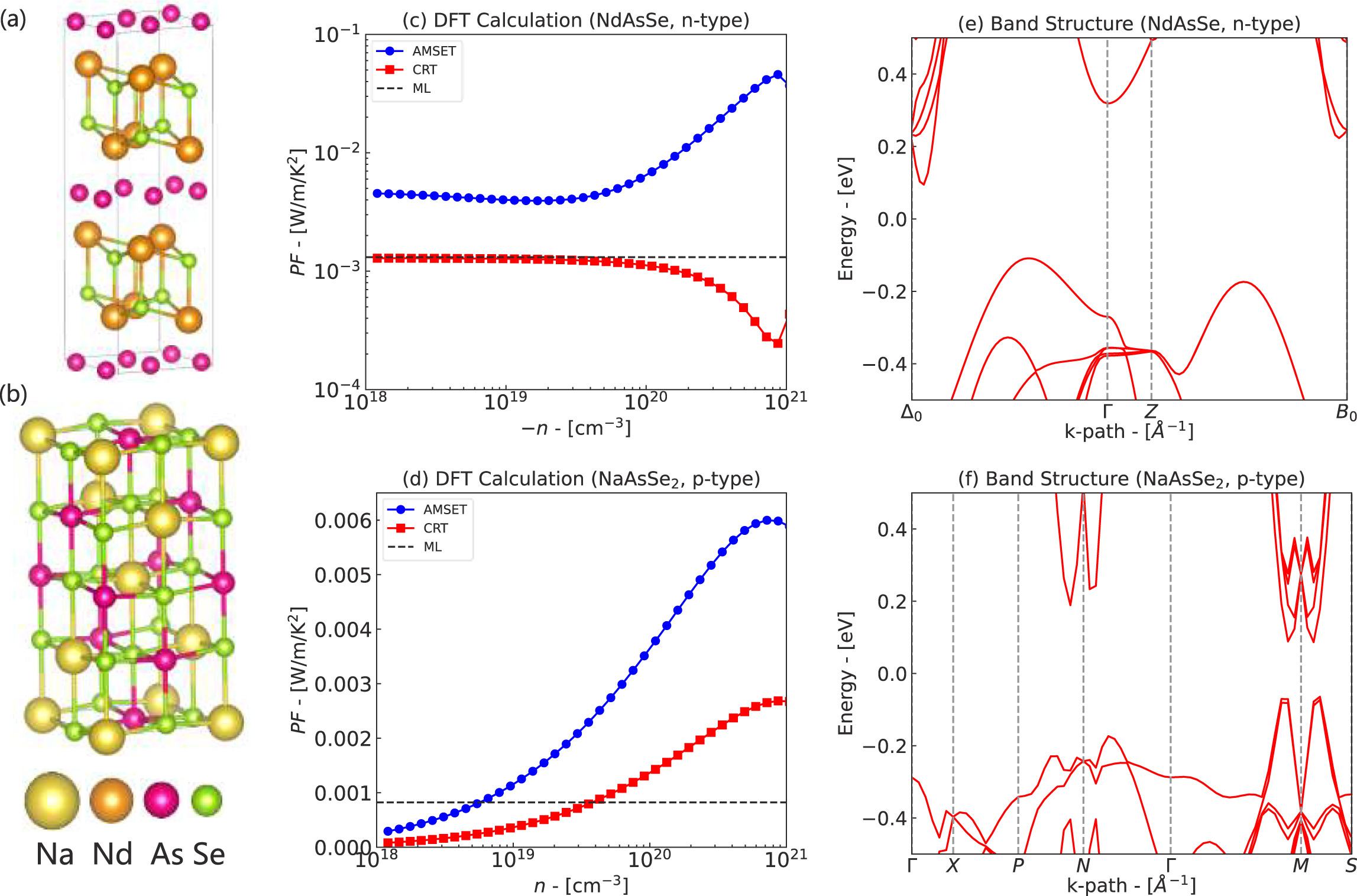
Abstract: Thermoelectric materials represent an innovative energy solution, capable of converting waste heat into usable electrical power. Recent advances have leveraged machine learning to identify new thermoelectric materials, yet challenges remain in balancing applicability, feature complexity, and interpretability. In this study, we introduce an interpretable framework based on ensemble learning and Magpie chemical element features to predict the power factor (PF) of various materials. Our approach yields approximate analytical expressions for PF using simple elemental features, providing both accuracy and transparency. We validate our predictions with density functional theory, successfully identifying two high-PF selenides as promising candidates for thermoelectric applications.
Yuxuan Zeng, Wei Cao*, Tan Peng, Yue Hou, Ling Miao, Ziyu Wang*, Jing Shi
- Applied Materials Today (Appl. Mater. Today), 2025 (SCI Q2)
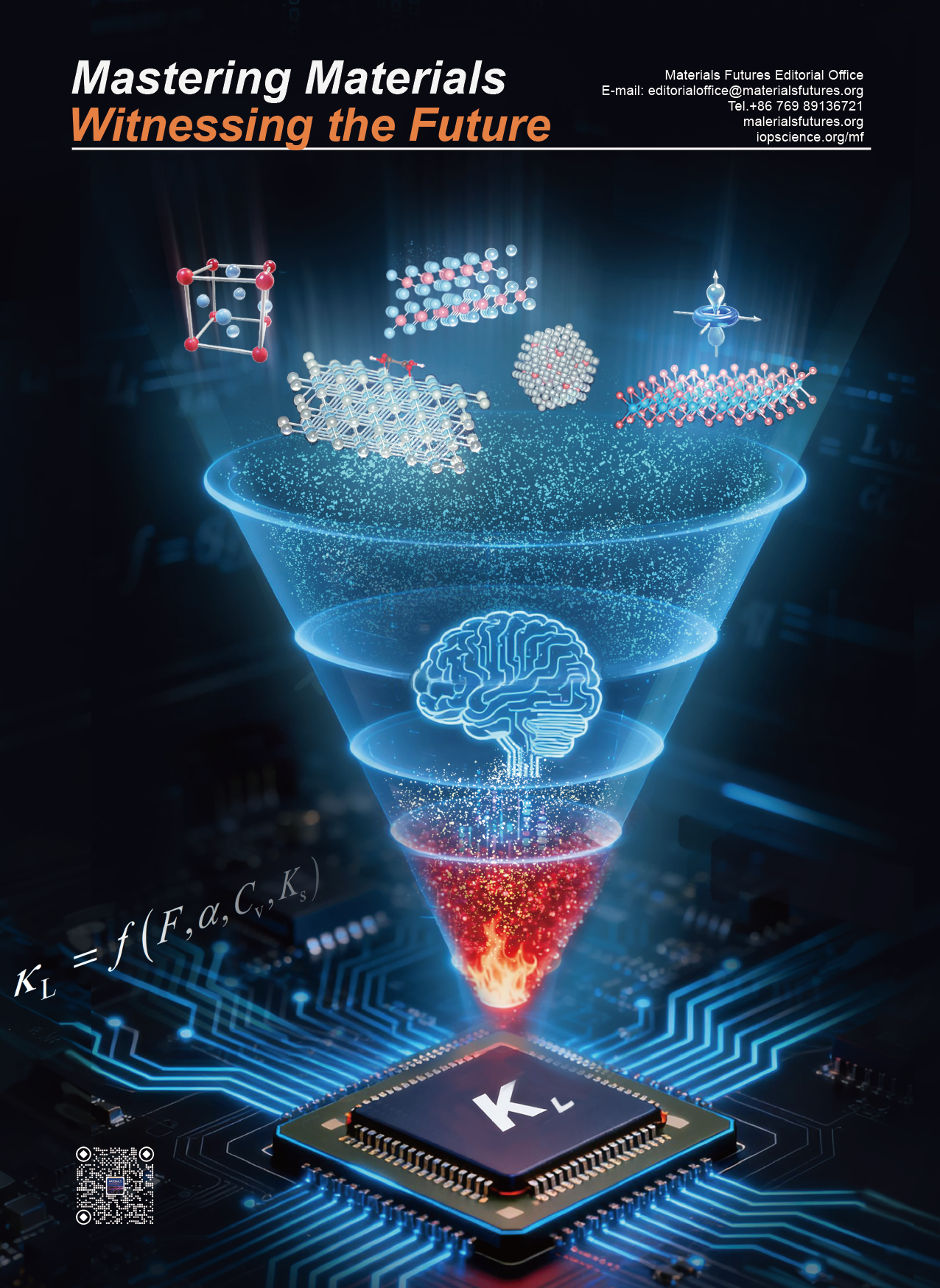
Abstract: Lattice thermal conductivity (LTC) is a critical parameter for thermal transport properties, playing a pivotal role in advancing thermoelectric materials and thermal management technologies. Traditional computational methods, such as density functional theory (DFT) and molecular dynamics (MD), are resource-intensive, limiting their applicability for high-throughput LTC prediction. While AI-driven approaches have made significant strides in material science, the trade-off between accuracy and interpretability remains a major bottleneck. In this study, we introduce an interpretable deep learning framework that enables rapid and accurate LTC prediction, effectively bridging the gap between interpretability and precision. Leveraging this framework, we identify and validate four promising thermal conductors/insulators using DFT and MD. Moreover, by combining sensitivity analysis with DFT calculations, we uncover novel insights into phonon thermal transport mechanisms, providing a deeper understanding of the underlying physics. This work not only accelerates the discovery of thermal materials but also sets a new benchmark for interpretable AI in material science.
Yuxuan Zeng, Wei Cao*, Yijing Zuo, Tan Peng, Yue Hou, Ling Miao, Ziyu Wang*, Jing Shi
- Materials Futures (Mater. Futures), 2025 (SCI Q1)
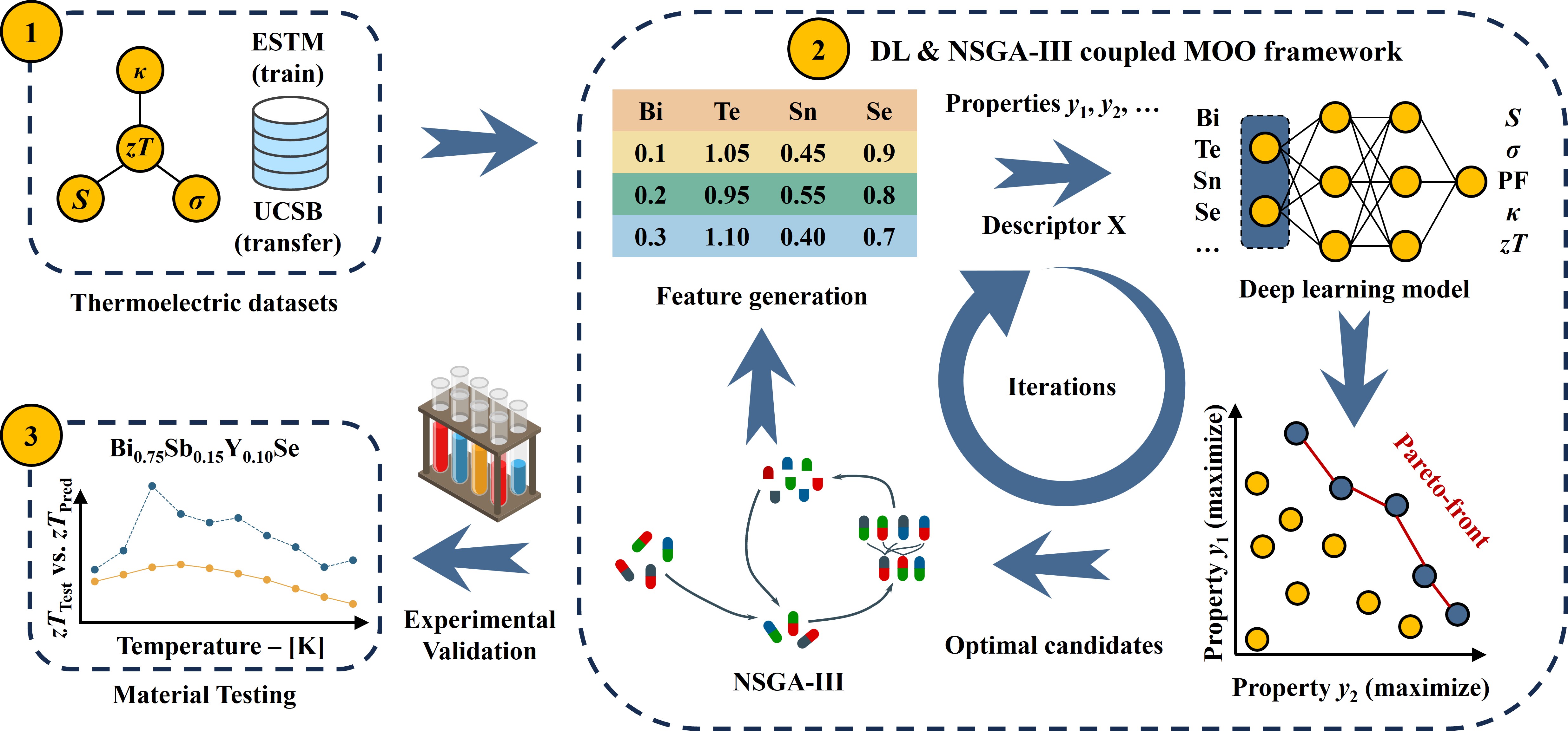
Abstract: The thermoelectric performance of materials exhibits complex nonlinear dependencies on both elemental types and their proportions, rendering traditional trial-and-error approaches inefficient and time-consuming for material discovery. In this work, we present a deep learning model capable of accurately predicting thermoelectric properties of doped materials directly from their chemical formulas, achieving state-of-the-art performance. To enhance interpretability, we further incorporate sensitivity analysis techniques to elucidate how physical descriptors affect the thermoelectric figure of merit ($zT$). Moreover, we establish a coupled framework that integrates a surrogate model with a multi-objective genetic algorithm to efficiently explore the vast compositional space for high-performance candidates. Experimental validation confirms the discovery of a novel thermoelectric material with superior $zT$ values in the medium-temperature regime.
Yuxuan Zeng, Wenhao Xie, Wei Cao*, Tan Peng, Yue Hou, Ziyu Wang*, Jing Shi
- npj Computational Materials (npj Comput. Mater.) (under review), 2025 (SCI Q1)
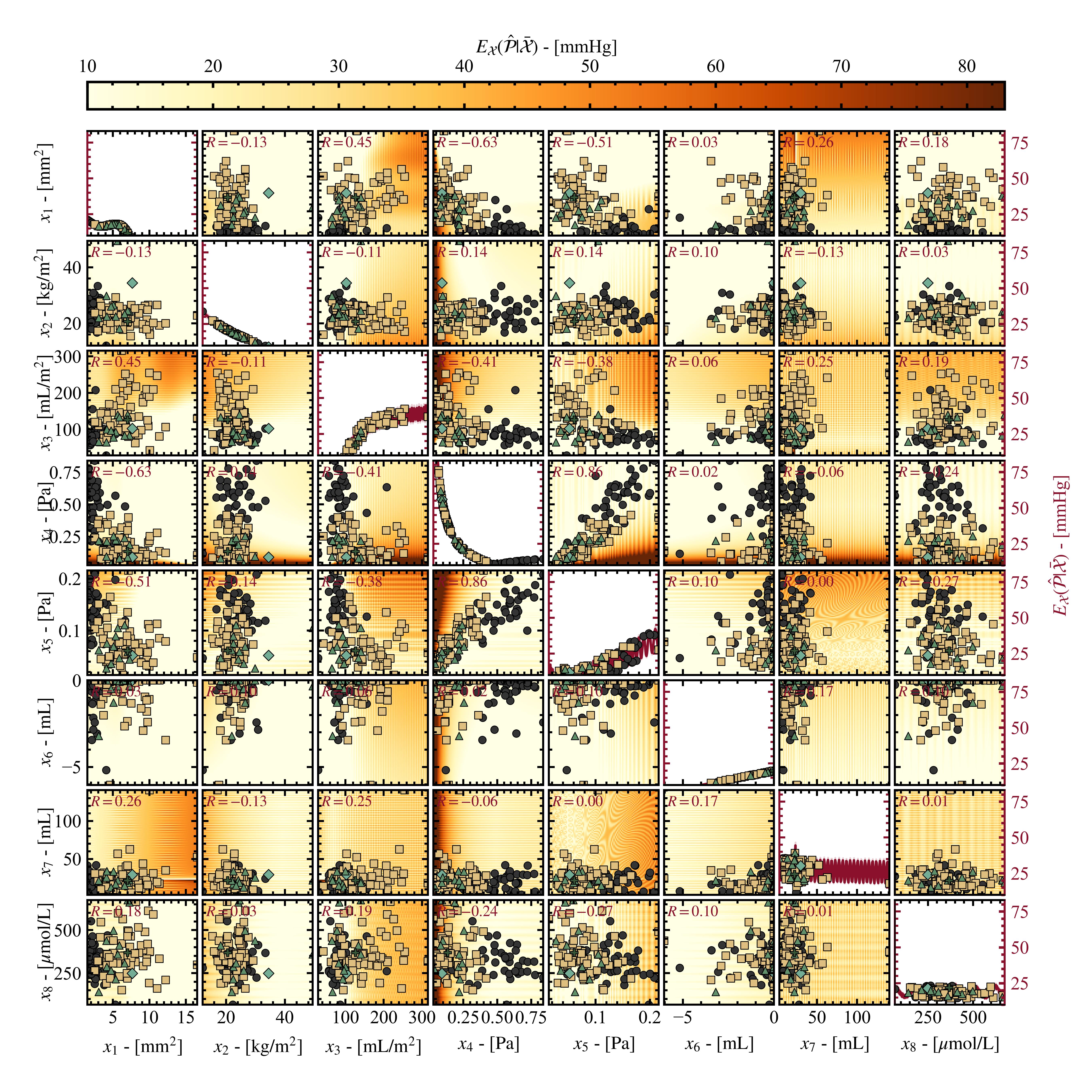
Yuxuan Zeng, Gonghao Ling, Haojie Zhang, Wei Cao, Xuan Zheng*, Xiaoxian Deng, Lan Lan, Rongqing Sun, Xintian Liu, Lin Tian, Haibo Xu*, Ziyu Wang* & Gangcheng Zhang*
Abstract: Reliable machine learning techniques have vast potential in assisting clinical decision-making, including applications in bioinformatics and medical imaging analysis. However, AI-driven medical research is often limited by data scarcity, data quality, and the black-box nature of machine learning models. Thus, there is an urgent need for reliable surrogate models to overcome these challenges, enabling accurate learning from small datasets to guide clinical diagnosis. Here, we conducted a retrospective observational clinical study and proposed a data-driven predictive model that estimates mean pulmonary artery pressure (mPAP) based on individual patient clinical diagnostic features, enabling accurate assessment of pulmonary hypertension. Furthermore, we innovatively incorporate CMR-related features into the disease evaluation framework. Compared to traditional invasive measurement methods, this framework can not only accurately predict a patient’s mPAP using easily accessible noninvasive physiological features but also incorporate uncertainty quantification to extract qualitative patterns, aiding clinical diagnosis.
Collection: Emerging Applications of Machine Learning and AI for Predictive Modeling in Precision Medicine
- npj Digital Medicine (npj Digit. Med.), 2025 (SCI Q1)

Learning Thermoelectric Transport from Crystal Structures via Multiscale Graph Neural Network
Abstract: Graph neural networks (GNNs) are designed to extract latent patterns from graph-structured data, making them particularly well suited for crystal representation learning. Here, we propose a GNN model tailored for estimating electronic transport coefficients in inorganic thermoelectric crystals. The model encodes crystal structures and physicochemical properties in a multiscale manner, encompassing global, atomic, bond, and angular levels. It achieves state-of-the-art performance on benchmark datasets with remarkable extrapolative capability. By combining the proposed GNN with ab initio calculations, we successfully identify compounds exhibiting outstanding electronic transport properties and further perform interpretability analyses from both global and atomic perspectives, tracing the origins of their distinct transport behaviors. Interestingly, the decision process of the model naturally reveals underlying physical patterns, offering new insights into computer-assisted materials design.
Yuxuan Zeng, Wei Cao*, Yijing Zuo, Fang Lyu, Wenhao Xie, Tan Peng, Yue Hou, Ling Miao, Ziyu Wang*, Jing Shi
- Physical Review Applied (Phys. Rev. Appl.) (under review), 2025 (SCI Q2)
🥇 Selected Honors and Awards
- 2025.12, ASML Scholarship of the School of Integrated Circuits, Wuhan University (武汉大学集成电路学院阿斯麦奖学金)
- 2023.06, Excellent BSc Thesis Award, Wuhan University of Technology (武汉理工大学优秀学士学位论文)
- 2021.10, Third Prize, Undergraduate Group, 11th MathorCup Mathematical Modeling Challenge (第十一届MathorCup高校数学建模挑战赛本科组三等奖)
- 2022.06, Third-class Scholarship, Wuhan University of Technology (武汉理工大学三等奖学金, 2021–2022)
- 2021.06, Second-class Scholarship, Wuhan University of Technology (武汉理工大学二等奖学金, 2020–2021)
- 2022.06, Merit Student of the School, Wuhan University of Technology (武汉理工大学院三好学生, 2021–2022)
- 2021.06, Merit Student of the University, Wuhan University of Technology (武汉理工大学校三好学生, 2020–2021)
- 2020.06, Merit Student of the School, Wuhan University of Technology (武汉理工大学院三好学生, 2019–2020)